
Director of Business Development, Brooks Automation
Clinical labs are being asked to do more every day. Results need to come back faster, but accuracy cannot slip. As workloads grow, manual handoffs often become the point where delays and errors creep in.
Automation helps stabilize lab workflows. Understanding where it has the biggest impact makes it easier to integrate into daily lab operations.
Manual Steps Cause Most Errors in Clinical Labs
Even in labs filled with advanced analyzers and software, most preventable errors still come from manual specimen handling.
Clinical labs process about 14 billion tests each year, and roughly 70 percent of medical decisions rely on laboratory results, according to the CDC. With that level of impact, even small handling errors can affect patient care, turnaround times, and trust in results.
Pre-Analytical Errors Increase as Workloads Grow
Many of the most frequent issues happen before a sample ever reaches an analyzer. These are called pre-analytical errors, which happen during sample collection, preparation, or transport. Common examples include:
- Labeling mistakes
- Wrong tube types
- Insufficient sample volume
- Timing inconsistencies for time-sensitive tests

Common pre-analytical errors in all lab environments.
Each of these errors can trigger repeat testing, delay results, or force staff to track down missing information.
These pressures compound when staffing is tight. Short-handed labs often ask technologists to cover multiple benches at once, which leads to frequent interruptions.
Data management adds another risk. Manual sample routing, delayed data entry, or missed status updates increase the risk of human errors. Samples may go to the wrong instrument or skip a required step. When problems are not caught early, they are harder to correct later.
How Purpose-Built Robotics Reduces These Errors
Laboratory robots help by removing variability from the most repetitive steps:
- Robots handle transfers and timing consistently, without fatigue or distraction.
- Systems that work safely alongside staff fit into existing lab workflows without the need for isolated robot cells.
- Vision checks confirm that the correct sample is in place before the next step begins.
By standardizing these handoffs, lab automation reduces handling errors and supports the people who run the lab every day.
Automation Eliminates Workflow Variation
Automation improves accuracy and consistency by removing small differences in timing, handling, and movement. In busy clinical labs, these differences often lead to delays, repeat testing, and inconsistent results.
When steps happen the same way every time, labs spend less time correcting issues and more time moving samples forward. Automation supports this predictability by taking over repetitive tasks that are difficult for humans to perform consistently across long shifts.
Automation Brings Stability And Trust
Robots do not replace human judgment or flexibility. Instead, they remove human inconsistency.
People naturally adapt as conditions change. This helps with problem-solving, but it can create risk in repetitive tasks that require precision. Automation brings stability to those steps so results are easier to trust.
Key gains labs see from automation include:
- Timing precision is critical for PCR and immunoassay workflows, where even small delays can affect results
- Positional accuracy ensures plates and racks align correctly with instruments every time
- Barcode validation and traceability reduce the risk of mix-ups and lost samples
These improvements translate directly into higher productivity. In a multi-site study of clinical laboratories, total automation increased the number of tests performed per worker by about 1.4 times in clinical chemistry and up to 3.7 times in serology. This shows where automation has the greatest impact in coordinated, high-volume workflows.
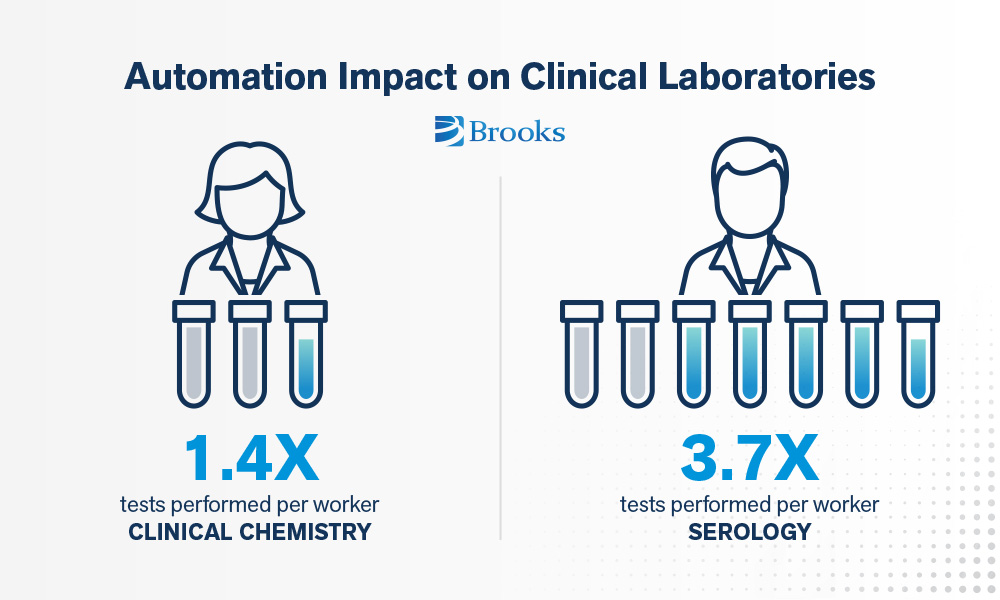
Studies show a significant rise in productivity with automation in clinical laboratories.
Precision Handling Enhances Consistency
Consistent handling plays a major role in reliable lab performance. Tight, repeatable motion reduces small alignment errors that can lead to failed runs or instrument errors.
Vision-guided systems with auto-teach capabilities help maintain accuracy as labware positions change. They also adapt when deck layouts shift over time.
Lab-Specific Motion Control Strengthens Consistency
Some lab-focused robots use low-inertia motion and built-in auto-teach vision to keep timing and positioning stable as workflows evolve. These systems move smoothly and predictably. This helps reduce assay drift, prevent loading errors, and support reliable day-to-day performance.
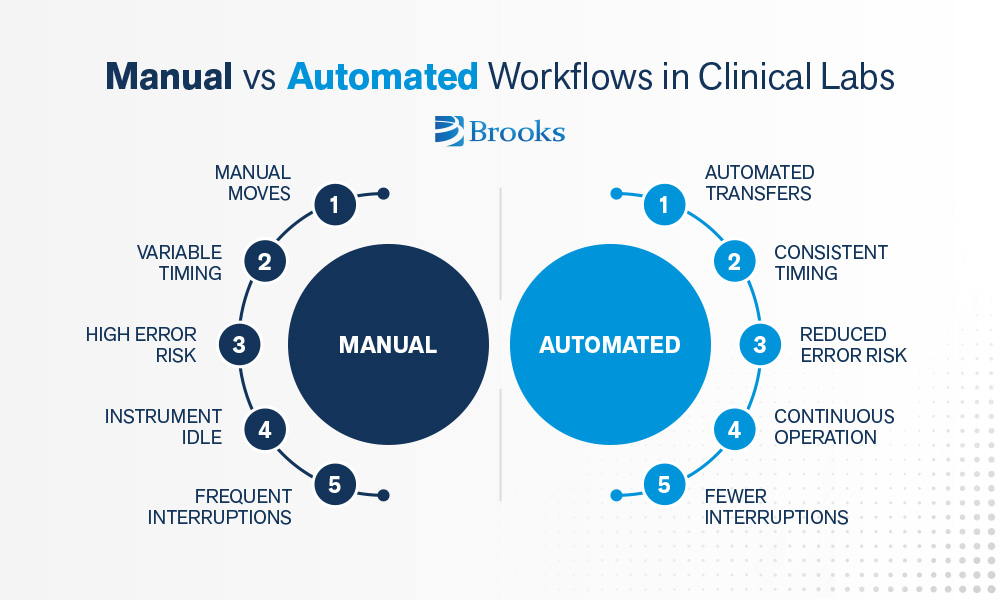
Automated workflows in clinical labs offer advantages over manual processes at every step.
Industrial Robots Don’t Work Well in Clinical Labs
Many robots used today were designed for manufacturing floors, not clinical laboratories. Manufacturing environments usually have open floor space, clear safety zones, and limited human interaction.
Clinical labs are the opposite. They are crowded, instrument-dense spaces where people and machines work side by side. Robots not designed for this setting, often create more problems than they solve. On the other hand, robots designed for lab work, solve numerous issues labs face today.
Some of the biggest problems labs face with most industrial robots are:
1. Workspace Shape Creates Collision Risk
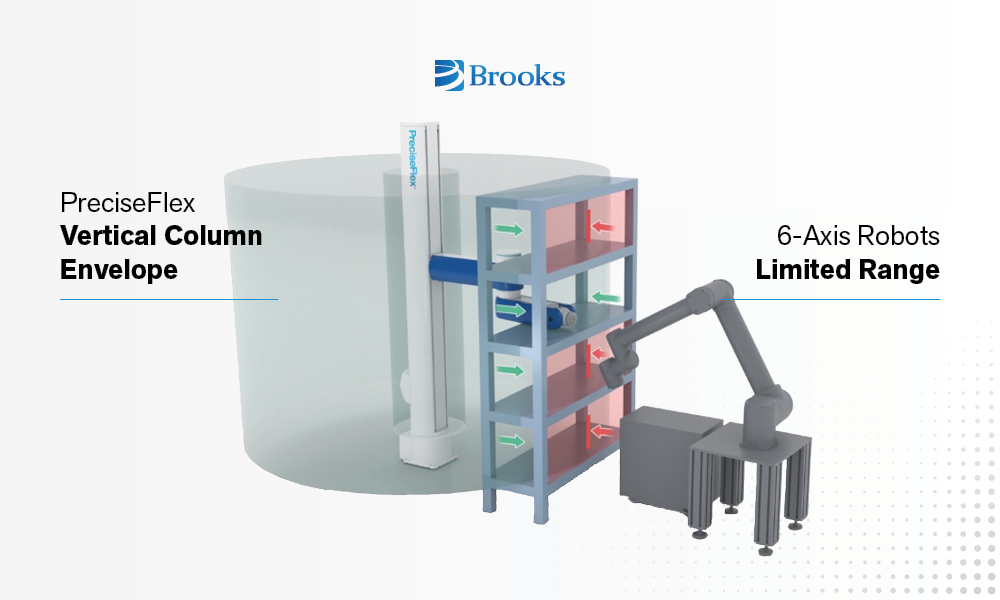
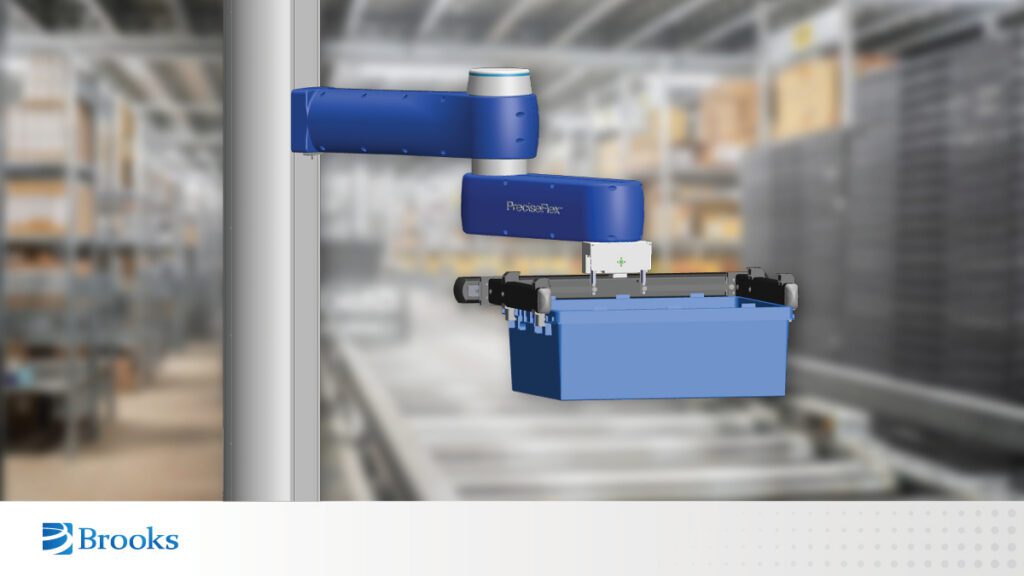
Traditional robots have a limited range and mobility in their spherical workspace volume, unlike PreciseFlex robots with a vertical column envelope.
One of the biggest challenges is the robot’s workspace volume. Many industrial robots use a wide, spherical work envelope. As the arm moves, it sweeps through a large area. In a clinical lab, that motion can collide with benchtops, analyzers, incubators, and shelving. To reduce these risks, labs often slow the robot down or add physical barriers. Both steps reduce flexibility and efficiency.
2. Safety Requirements Force Slower Operation
Speed and safety are closely linked. Robots with high reflected inertia, meaning they carry more force when they move, must operate at slower speeds in shared spaces. In labs where people work nearby, this reduction is necessary to maintain safety. However, slower motion reduces throughput and limits the value of automation.
3. External Hardware Consumes Limited Lab Space
Space constraints add another layer of difficulty. Large external controllers and cable bundles take up valuable bench or floor space. In many labs, there is simply no room for extra cabinets without blocking access to instruments, walkways, or emergency paths. This can make already crowded work areas harder to manage.
4. Guarding and Separation Disrupt Daily Workflows
Even when collision risks are addressed, safety measures can still disrupt workflows. Industrial robots often require guarding or physical separation from staff. This approach may work in a factory, but it is rarely practical in a clinical lab where technologists need frequent access to instruments.
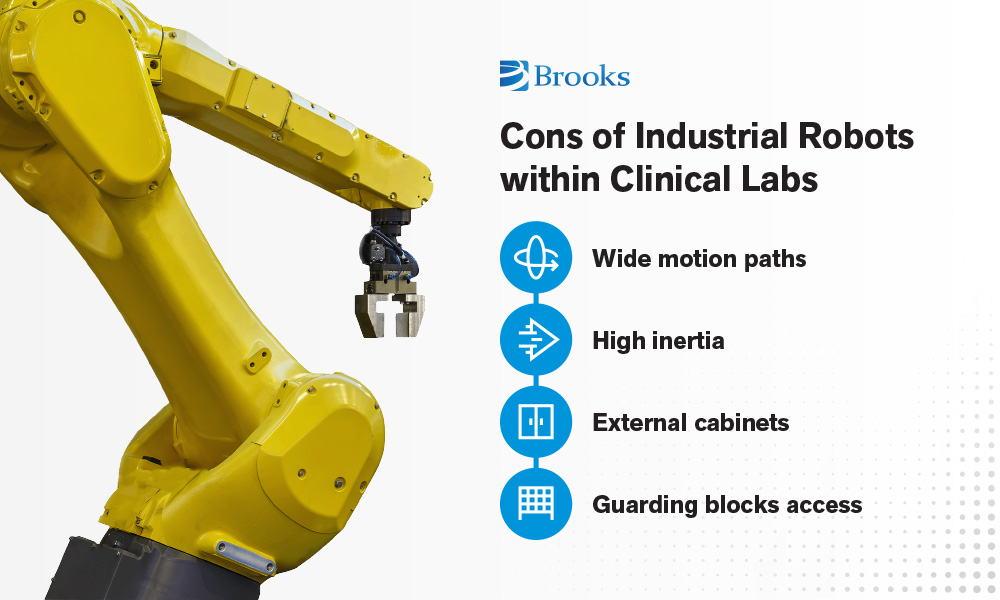
Industrial robots not designed for lab use have several disadvantages that can limit the positive effects of automation.
How PreciseFlex™ Robots Address These Lab-Specific Challenges
Robots designed specifically for laboratory environments take a different approach. PreciseFlex™ robots are built to operate safely and efficiently inside instrument-dense clinical labs without forcing layout changes.
Key design characteristics include:
- Low-inertia motion reduces collision risk while allowing robots to move at practical speeds in shared lab spaces
- Vertically optimized work envelopes that fit between closely spaced analyzers, incubators, and shelving
- Embedded controls, eliminating the need for bulky external cabinets and large cable bundles
- Smaller footprints, helping preserve bench and floor space in crowded lab environments
PreciseFlex™ robots focus on motion control, footprint, and integration. This allows them to fit into existing clinical workflows instead of forcing labs to redesign around automation.
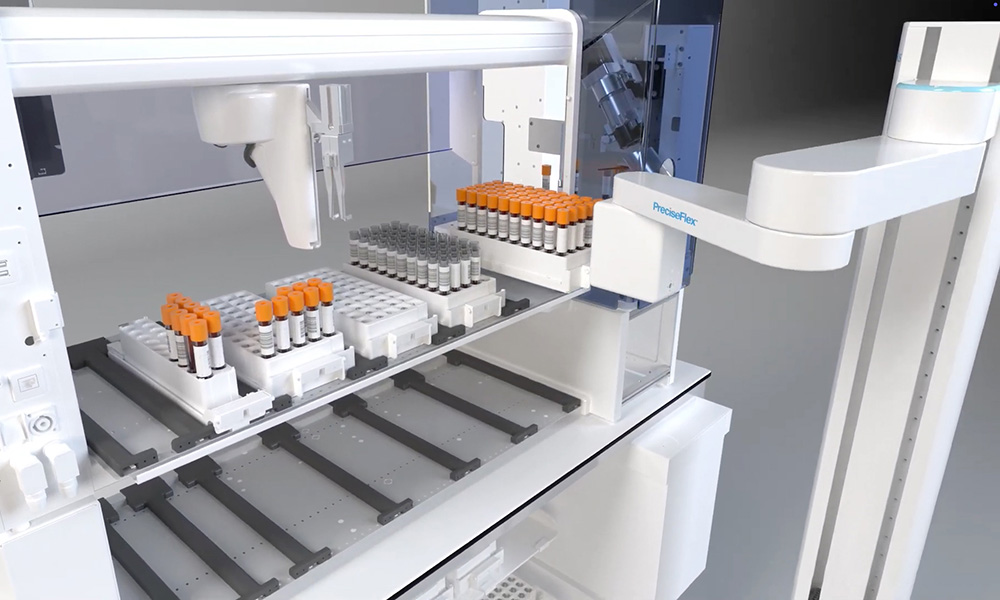
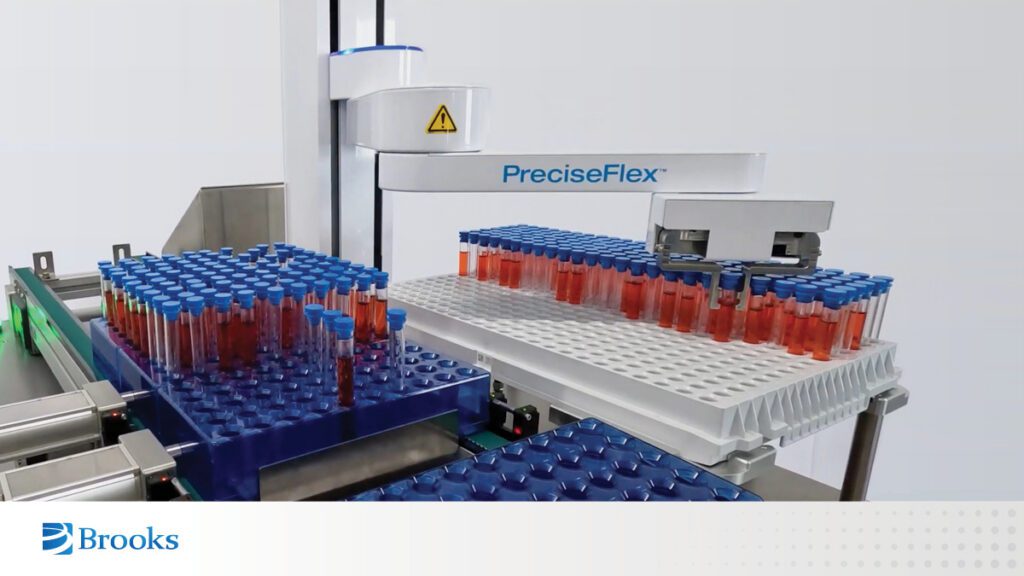
PreciseFlex™ robot in practical use with a compact footprint and high utilization of the work envelope.
Where Automation Delivers the Biggest Turnaround Time Improvements
Turnaround time improves most when labs automate the handoffs that slow work down. These are the moments when samples wait for someone to move them, check them, or load them into the next instrument. When those steps are automated, samples keep moving and analyzers spend less time sitting idle.
Pre-Analytical Steps
Pre-analytical work is a frequent source of delay. Automation helps by handling repetitive tasks consistently, including:
- Sorting incoming samples
- Validating barcodes to confirm identity
- Aliquoting samples into the correct containers
- Checking tube or plate orientation
When these steps run automatically, samples reach analyzers sooner and with fewer interruptions.
Analytical Support
Analyzers often sit idle while staff are busy elsewhere. Automation reduces this downtime by keeping instruments supplied with samples. Automated loading and unloading allows:
- Faster response when analyzer capacity opens
- Steadier sample flow during busy shifts
- Continued operation during nights or low-staff periods
Keeping instruments running consistently is one of the fastest ways to reduce turnaround time.
Post-Analytical Steps
Delays can also build up after testing. Automation helps maintain flow by managing:
- Plate transfers between instruments
- Timing for follow-up incubations
- Sealing or peeling plates
- Routing samples to downstream testing or storage
These steps often happen in sequence, so delays in one area can affect everything that follows.
Compact Automation in Crowded Workcells
Turnaround time also depends on how easily work moves through the lab. Compact automation supports faster flow by fitting into existing workcells without blocking access:
- Slim robotic footprints allow staff and samples to move freely
- Vertical reach supports stacked or closely spaced instruments
- Clear paths reduce waiting and unnecessary handoffs
When automated systems fit the space and support movement, it removes delays instead of creating them. The future of lab automation is all about small footprint and flexibility, not bulky hard automation.
How Labs Implement Automation Without Disruption
Automation works best when it supports how a lab already operates. Successful projects focus on reducing friction, not replacing people or redesigning the space. When automation fits both the physical layout and the way staff work, adoption is faster and results are more reliable.
Practical Steps for Implementing Automation
Labs that deploy automation successfully follow a few consistent principles.
- Integrate With Existing Instruments
Automation works best when it fits into the lab as it is today. Some systems can be added at the bench or between instruments. This reduces downtime and avoids construction or room changes. - Design for Workflow Flexibility
Lab workflows change as test menus grow and volumes shift. Automation should adapt without full reprogramming or reconfiguration. Mobile bases, bolt-on robots, and auto-teach vision give labs flexibility as needs change. They allow layouts and workflows to adjust over time without rebuilding the system. - Build in Data Handling From the Start
Data capture should not be an afterthought. Integrating barcode reads, presence checks, and status tracking early helps maintain traceability. It also supports compliance throughout the workflow. Automating these steps reduces manual entry and lowers the risk of missed records. - Train Staff As Process Owners
People remain central to success. Training works best when technologists are treated as process owners, not machine operators. When staff understand how automation supports quality and flow, adoption is faster.
When labs take this approach, automation becomes a practical tool. It improves performance without disrupting daily operations or the people behind them.
PreciseFlex™ Options That Extend Deployment Flexibility
Beyond core robot design, PreciseFlex™ offers configuration options that help labs adapt automation to real-world layouts and changing workflows without adding complexity.
- IntelliGuide™ Vision: Vision support helps robots locate labware and adjust to small layout changes. This reduces manual reteaching when instruments move or workflows change.
- Flexible software options: PreciseFlex™ supports multiple programming approaches, including APIs, no-code tools, and full programming environments. Labs can choose the level of control that fits their workflow.
- Mobile automation: PreciseFlex™ robots can be deployed on mobile platforms. Low power use and embedded controls support stable operation without major facility changes.
Together, these options give labs more ways to deploy automation where it fits best, without locking workflows into fixed layouts or requiring complex infrastructure.
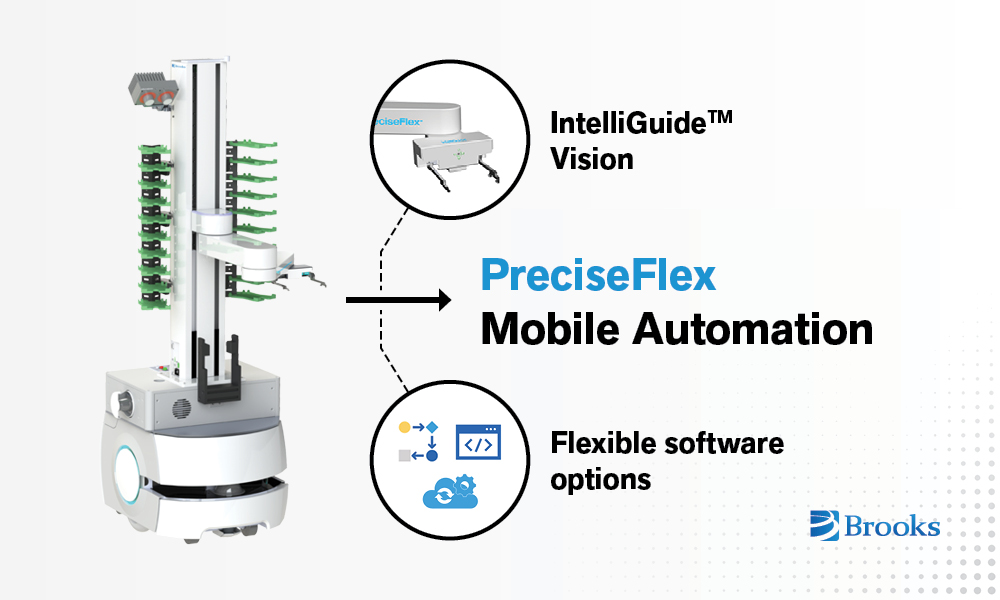
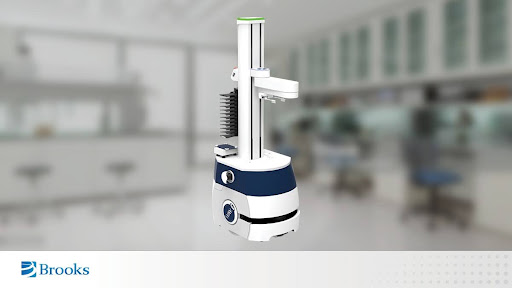
PreciseFlex™ mobile robot supports IntelliGuide™ and flexible software options.
Reducing Variation Where It Matters
In clinical labs, drug discovery, or automated pathology labs, performance rarely breaks down because of the test itself. Breakdowns occur between steps, where timing slips, samples wait, and staff feel stretched thin. Reducing that variable allows labs to move faster without putting accuracy at risk.
Automation helps by stabilizing timing and keeping samples moving. It also eases pressure on staff in busy, instrument-dense environments. When automation fits naturally into existing workflows, labs see more consistent turnaround times and fewer avoidable errors.