
Director of Business Development
Keeping up in today’s labs is tough. Teams must process more samples, run more experiments, and deliver results faster, often without extra staff or resources. Simple tasks like moving plates, transferring tubes, and loading instruments slow everything down and lead to delays.
Laboratory robots help ease this pressure. When robots handle repetitive tasks, workflows stay on schedule and multi-step assays run with fewer interruptions.
For many labs, robotics has become a practical way to handle expanding workloads and free up staff to focus on the tasks that matter most.
Why Labs Are Turning to Robots
Scientific labs across research, diagnostics, and quality control are handling more work than ever. Testing is more complex, data expectations are higher, and teams must support more projects at once. But staffing often stays the same, which makes it hard for labs to keep up.
R&D teams feel this pressure every day. They are expected to:
- Run more parallel conditions so results can be compared side by side
- Test more variables to make findings stronger and more reliable
- Manage multi-day and multi-step workflows that only work when each step happens at the right time
Each of these tasks depends on consistent handling. When teams are stretched thin, even small delays can push entire projects off schedule.
Hiring Alone Cannot Fix the Problem
Even when labs want to grow their teams, they face real limits:
- Skilled lab technicians are hard to recruit and retain
- Biotech and clinical labs often compete for the same talent
- Training new staff on complex workflows takes time existing teams don’t have
The national workforce gap makes this even harder. According to GWU, the U.S. needs about 10,000 new medical laboratory professionals each year, but training programs produce only around 5,000 graduates. More than 60% of the current workforce is nearing retirement, which widens the shortage.
Because of these challenges, many labs cannot simply add people to meet demand. They need ways to reduce manual work, protect timing, and support more projects without increasing staff load.
Manual Handling Creates Delays, Errors, and Workflow Breakdowns
Much of a technician’s day is spent on repetitive actions such as pipetting, plate transfers, incubator loading, and instrument tending. These tasks look simple, but they dictate the pace of a workflow.
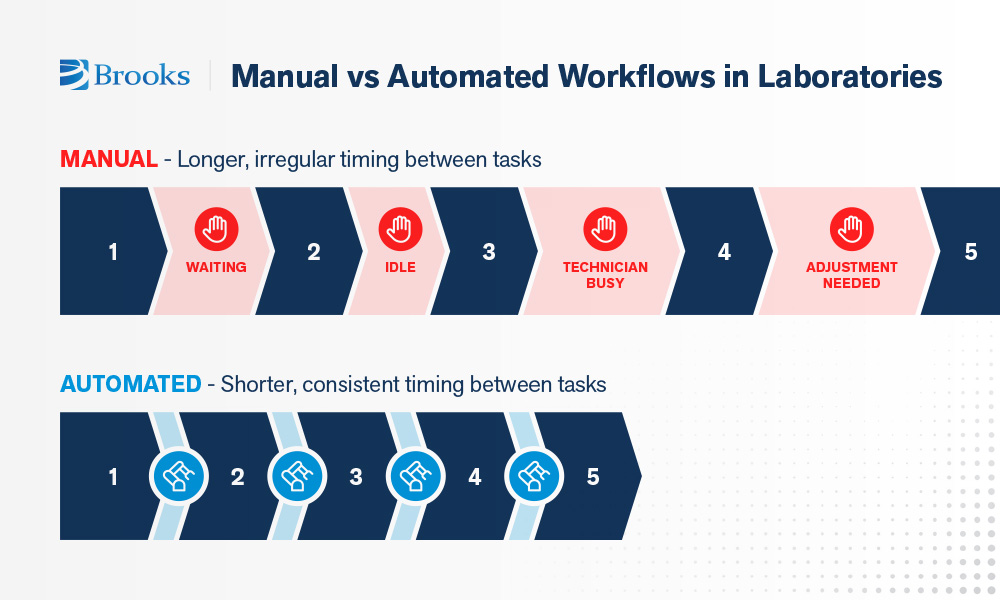
Multi-step assays break down when timing isn’t consistent. Small issues can slow everything down, such as:
- An incubator sitting idle because a technician is tied up with another task
- A plate waiting too long between steps, which can change the outcome of the assay
- A mislabeled tube, which forces retesting or repeat prep
- A dropped or misplaced sample, which affects compliance and result accuracy
These small problems add up and have a real impact on throughput and data quality.
Operational Pressures Make Manual Workflows Even Harder to Sustain
Labs also face practical limits that make it hard to scale. Overtime, reruns, and rushed fixes increase costs and add pressure to already busy staff. Many labs also have very limited bench space, and expanding a facility is exorbitantly expensive and out of reach for many labs.
Leadership wants steady, predictable turnaround times, not workflows that rely on constant workarounds or last-minute adjustments.
As demand grows, manual workflows shift from being a workable system to becoming the main bottleneck. Instead of supporting the lab, they start slowing everything down.
Why Robots Are Part of the Solution
Laboratory robots perform repetitive tasks that normally slow technicians down. They stay consistent, prevent handling errors, and keep instruments running smoothly.
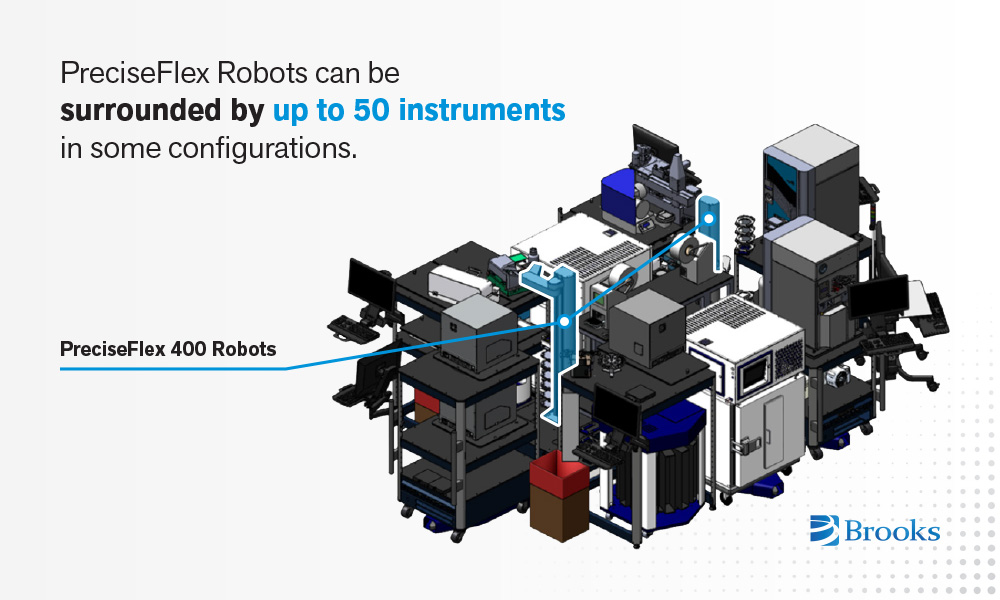
Workspace-efficient robots like PreciseFlex™ make automation possible even in tight labs. Their design fits high-mix workflows and keeps operations consistent without altering the bench setup.
PreciseFlex™ offers several space advantages:
- A vertical column design that uses space more efficiently
- The ability to reach into hotels, racks, and instruments with better vertical access
- Embedded controls with no bulky robot cables require less valuable lab space
Traditional collaborative robots often have spherical work envelopes with limited vertical reach, along with large external controllers and heavy cabling that take up more room. PreciseFlex™ avoids these issues, giving labs more usable workspace, a more compact footprint, resulting in higher device density.
Robots Deliver the Most Value in High-Mix Tasks
High-mix labs run many different assays, often back-to-back. Plates move between instruments, vials need careful handling, and timing has to stay tight at every step. These workflows can break down quickly when staff are busy or pulled into other tasks.
Robots help keep things on track by taking over the repetitive motions that require steady timing, accuracy, and speed. When these core steps run smoothly, the whole workflow becomes more stable and predictable.
Core Tasks Robots Handle Well
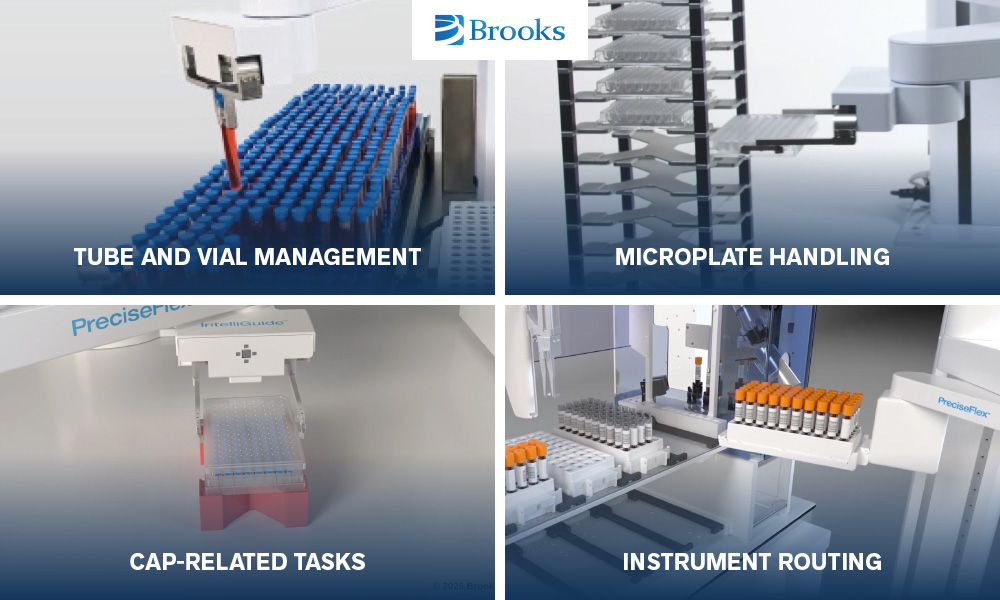
Modern laboratory robots excel at repetitive, precision-critical movements, including:
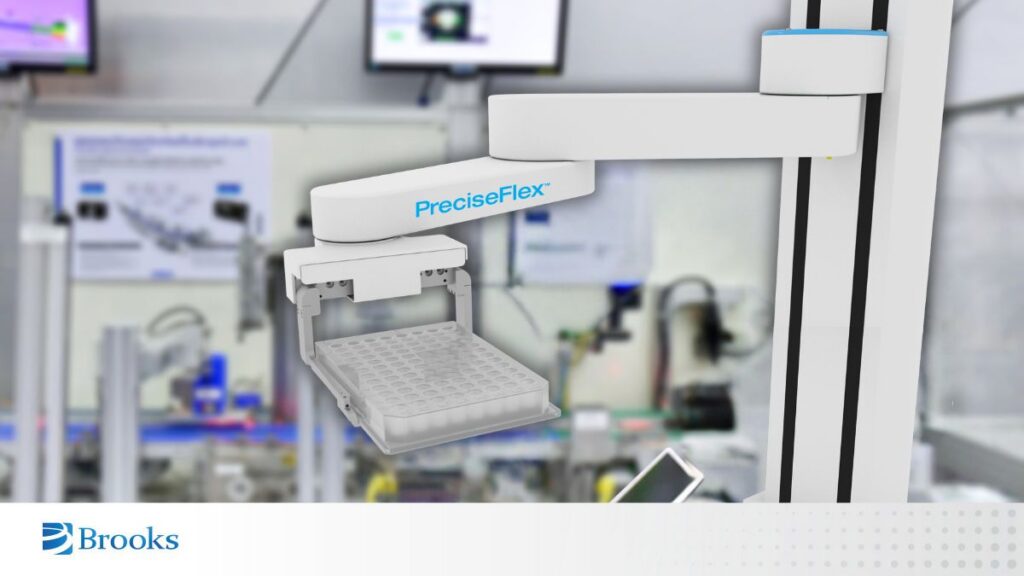
- Microplate handling: genomics workflows, screening, drug discovery, assay prep
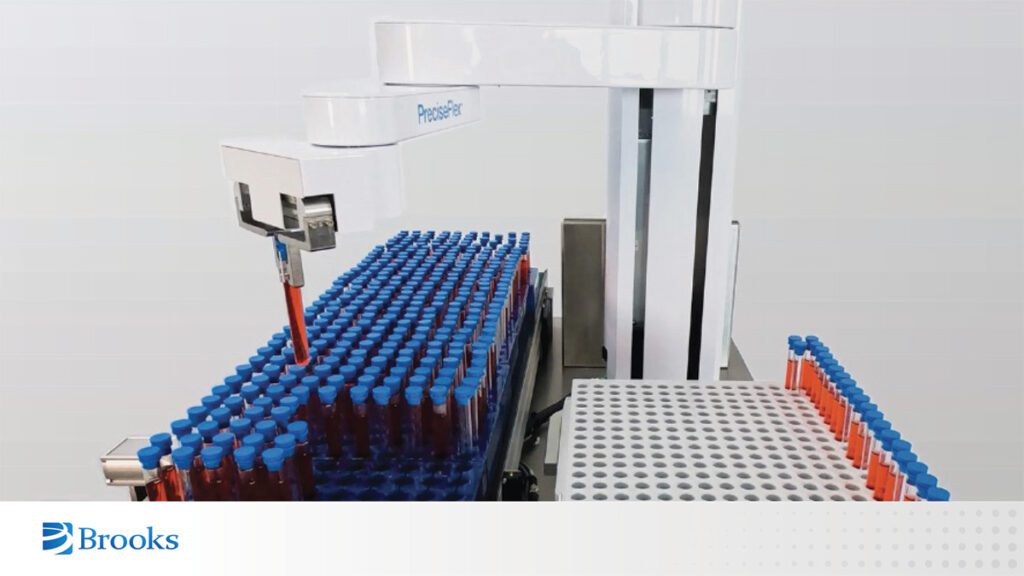
- Tube and vial management: racking and unracking, sorting, centrifuge loading
- Cap-related tasks: lidding, delidding, capping, decapping, plate sealing
- Instrument routing: moving samples between incubators, imagers, polymerase chain reaction (PCR) machines, liquid chromatography and gas chromatography systems (LC/GC), mass spectrometry instruments (MS), and other preparation stations.
These tasks form the bulk of daily lab work, which makes them ideal candidates for automation.
High-Impact Use Cases Across Laboratory Types
Robots deliver strong value in a wide range of lab environments:
- R&D labs: High-throughput screening, compound management, time-course studies, NGS preparation
- Bioprocess and cell-culture labs: Plate transfers, incubation cycles, imaging routines with precise timing
- Clinical diagnostics: Analyzer loading, rack transfers, overnight batching, and off-shift throughput support
- QC and analytical labs: Repetitive batch loading, stability testing, routine sample prep
In each setting, robots strengthen workflow consistency and help teams keep pace with growing demands.
Why These Workflows Are a Strong Fit for Automation
High-mix research relies on repeated movements that follow the same path every time. Even small timing errors or handling mistakes can interrupt an assay, delay a batch, or create uneven results. Robots help prevent this by keeping a steady pace, reducing pauses between steps, and keeping instruments running on schedule.
Robots also support more reliable data quality. When every plate, tube, or rack is handled the same way across dozens or even hundreds of runs, results become more consistent and easier to compare across experiments and teams.
The Real Challenges Labs Face When Automating
Even though robots can improve daily lab work, automation is not as simple as placing a robot next to an instrument. Labs have complex workflows, shifting priorities, and strict quality standards. Understanding the main challenges helps teams plan automation that fits how their lab operates day to day.
Labware and Workflow Variability
Laboratory work is rarely the same from one team to another. Many details vary, such as:
- plate types
- carrier formats
- tube sizes
- labeling styles
Even small issues, like a rotated barcode or an overfilled rack, can cause rigid automation to fail.
High-mix R&D makes this even harder. Protocols change often, instruments move between benches, and sample handling steps shift as projects evolve. Robots need to adjust quickly without major reprogramming or redesign.
Space, Ergonomics, and Biosafety
Most labs don’t have extra space for large automation systems. It can be hard to fit robots in and around:
- compact benches
- incubators and instruments
- narrow aisles
- biosafety cabinets
- fume hoods
If layouts aren’t planned well, robots can block access to instruments or make it harder for technicians to move around.
Compact robots, like workspace-efficient column designs, help avoid these problems because they fit into tight areas without interfering with nearby equipment or staff movement.
Collaborative applications also require real safety checks. Even if a robot is marked as collaborative, it still needs a proper risk assessment and careful workflow planning to ensure safe use in shared spaces.
Software and Data Integration
Robots must connect to the lab’s digital systems, such as:
- Scheduling and workflow software, which helps plan each step
- LIMS (Laboratory Information Management Systems), which track samples
- ELNs (Electronic Lab Notebooks), where teams record methods and results
- Instrument APIs and QC tools, which share data between instruments and automation
Validated labs have even stricter rules. Any update or workflow change must be documented and traceable. Automation also has to protect sample identity and important data from start to finish. Having an open-source, O.S. agnostic API library for lab robots is critical.
Organizational Readiness
Successful automation requires teamwork across IT, QA, facilities, and lab operations. Labs need robots that scientists can learn, maintain, and use without needing constant help from engineers.
Robots with integrated controls and small footprints, like PreciseFlex™, reduce the need for extra cabinets and fit into compact lab spaces. This makes it easier for labs to overcome common setup challenges and add automation with less disruption.
How Robots Create True Walkaway Time
Walkaway time changes how labs operate. Instead of stopping and starting work based on when a technician is available, robots keep instruments running at a steady pace. This steady rhythm is especially important in workflows that need precise timing and smooth handoffs from one step to the next.
Robots support long, uninterrupted workflows by taking over the repetitive movements that need precise timing. Their steady, repeatable motion keeps samples moving between steps without delays. They also use built-in checks to spot small placement errors early, which helps prevent the entire workflow from stopping.
This reliability makes robots a good match for multi-step workflows such as:
- ELISA (a plate-based assay that requires exact timing between washes and incubations)
- NGS prep (Next-Generation Sequencing preparation, where steps must stay in order and on time)
- Cell-culture imaging (where plates move between incubators and imaging stations on a set schedule)
In each of these workflows, timing affects both speed and data quality, so keeping steps consistent is essential.
Walkaway time matters because it:
- Supports predictable overnight and weekend runs
- Keeps timing tight across incubations, imaging cycles, and PCR steps
- Reduces interruptions and small stoppages that slow instruments down
- Frees scientists to focus on design, analysis, and troubleshooting
Together, these benefits create a more stable and predictable workflow that can grow as demand increases.
Human Impact
Walkaway time changes how teams work.
- Less repetitive handling reduces strain and lowers the risk of injury
- Technologists can oversee multiple workflows instead of one instrument at a time
- Teams gain more predictable turnaround times and spend more time on high-value tasks
These improvements help staff shift from constant task-switching to more focused, impactful work that supports better scientific outcomes. They also increase staff engagement and can reduce turnover.
Case Study: Improving Walkaway Time in a Tight Footprint
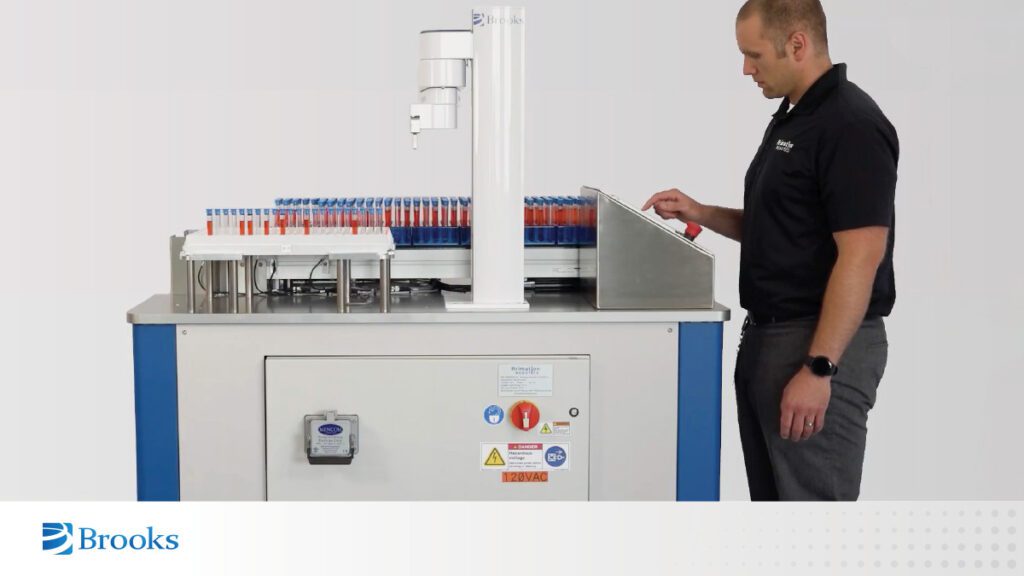
Arimation Robotics and Brooks worked with Precision Diagnostics to understand their workflow challenges and walkaway-time goals. Together, they created an automated vial re-racking solution that:
- removed several manual steps
- supported the lab’s low power-use requirements
- kept the process consistent even in a small workspace
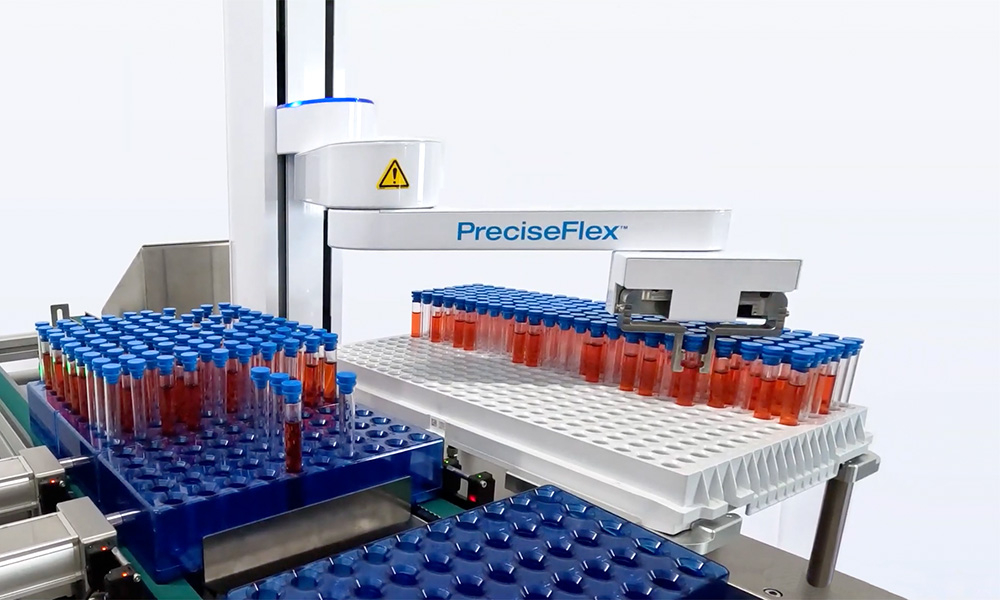
The PreciseFlex™ 3400 robots played a key role by:
- reaching all required positions within a small workspace
- keeping workflow moving without operator adjustments
- reducing the small pauses and handling delays that often slow down repetitive tasks
- using the IntelliGuide™ servo gripper with internal cabling, eliminating external cabling and dress packs

CEO, Arimation Robotics
This collaboration helped Precision Diagnostics maintain a stable workflow, increase walkaway time, and achieve reliable performance in a busy diagnostic environment. Read the full case study here.
A Practical Roadmap for Getting Started with Lab Robotics
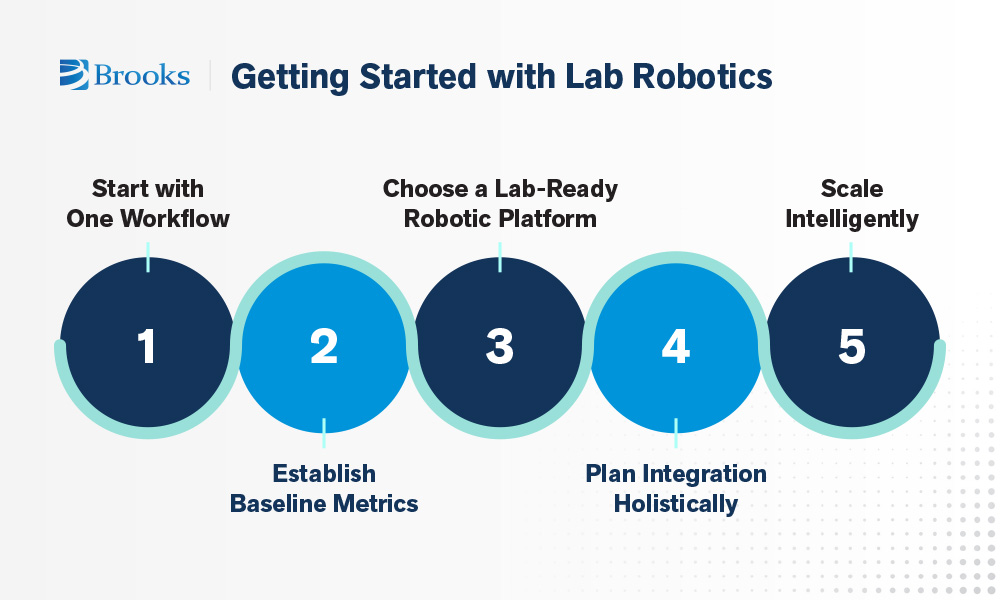
Getting started with lab automation doesn’t require redesigning your entire facility. The most successful teams take a phased approach that starts small, builds internal confidence, and expands as workflows stabilize. The steps below offer a structured path that labs of any size can follow.
Step 1: Start With One Workflow
Start with a task that is repetitive, predictable, and clearly slowing down your process. Good examples include:
- Plate loading cycles
- Re-racking tasks
- Timed incubation transfers
- Genomics or NGS (Next-Generation Sequencing) preparation steps, which require careful sample handling and several repeated setup steps before sequencing begins
Focusing on one workflow makes the first automation project easier to manage and gives your team a low-risk way to learn how to use the system.
Step 2: Establish Baseline Metrics
Before automating, measure how the workflow performs today. Track:
- throughput per shift
- cycle and wait times
- instrument idle time
- error rates and rework
- staff-hours per batch
- menial, repetitive labor time
These baselines help you define KPIs such as walkaway time or instrument uptime and prove the impact of automation later.
Step 3: Choose a Lab-Ready Robotic Platform
Select robots designed for real lab conditions. Look for:
- Compact footprint and workspace density to fit on benches and reach stacked instruments
- Embedded vision for fast deployments, location updates, barcode reading , etc.
- Adaptive grippers with controlled force and position
- Collaborative linear rails for when the robot reach needs to be extended
- Flexible software, from low-code tools to full API libraries
- Long duty cycles and efficient power use for multi-shift operation
These features ensure the system can adjust as instruments move, workflows change, or throughput increases.
Step 4: Plan Integration Holistically
Successful deployments require more than placing a robot between two instruments. Map out:
- instrument access points
- ergonomic paths for staff
- safety zones for shared work
- data pathways across LIMS, ELN, and scheduling systems
Build in training and documentation early so teams are self-sufficient in adjusting workflows without relying on outside engineering help.
Step 5: Scale Intelligently
Once the first workflow is running well, you can grow your automation in steps:
- Standardize gripper settings, vision routines, and workflow templates so your tools work the same way each time
- Build a small internal team that understands the system and can maintain and improve it
- Add linear rails, autonomous mobile robots, or roll-up carts to link different work areas as your needs grow
Building a roadmap this way helps labs expand automation with confidence while keeping each step easy to measure, maintain, and align with scientific goals.
The Next Step in Lab Automation
Labs that automate gain the ability to run longer and more complex experiments without hiring more staff. Robots bring steady timing to workflows that were once limited by human speed and variation. As more instruments become automation-ready, the labs that adopt automation early will be the ones that scale faster, adjust to new methods, and keep up with growing scientific demands.
The real advantage will go to teams that keep instruments running continuously and build stable workflows that support both accuracy and high throughput.
When delivered as part of turn-key systems from our integration and OEM partners, PreciseFlex robots deliver these future-ready capabilities, helping teams deploy automation faster, operate with greater stability, and scale with confidence.