
Product Manager, Brooks Automation
Drug discovery teams feel more pressure every year. They are asked to screen more compounds, run more assays, and deliver cleaner data, often without extra staff, resources, or space.
Manual work slows everything down. Simple tasks like moving plates or timing incubations create delays and add variation that can affect results.
Large lab automation systems were designed for stable, high-throughput work, which makes them difficult to adjust when discovery workflows change. As a result, many labs are turning to compact, modular automation instead.
These smaller systems fit on the bench, adapt quickly, and bring reliable walkaway time to workflows that once required frequent hands-on attention. They also give teams an automated solution that improves speed and consistency.
Manual Tasks Slow Down Drug Discovery
Manual handling, inconsistent timing, and simple mistakes slow early drug discovery more than most teams expect. These issues may seem small, but together they reduce throughput and make results harder to trust.
This pressure continues to grow as discovery workloads increase. Teams work through larger screening libraries, which means more plates to prepare and transfer. Many also run multiplexed assays, which measure several signals at once and require tighter timing.
Manual work often cannot keep up. Technicians stop what they are doing to move plates between instruments, and if they are busy, incubators or readers sit idle. These delays build up and slow progress for the entire lab.
Where Human Error Slows Progress
Even small differences in how tasks are performed can affect results. For example:
- Slight pipetting changes can shift how compounds rank
- Timing drift between steps can change potency results
- Labeling mistakes also break traceability and often require repeat work
These issues reduce confidence in the data and make decisions slower and harder.
Large integrated systems can be effective in stable environments, but early discovery rarely stays still. As methods shift and equipment moves, these platforms become difficult to adjust.
This is why many R&D teams prefer compact, modular setups that support quick changes without major rebuilds or long setup times.
How Compact Automation Improves Hit Identification
Compact automation improves hit identification by managing the timing-sensitive steps that slow teams down. Robots move plates at the right moment, keep incubation windows consistent, and record plate identity automatically so each run follows the same pattern. This steadier workflow helps primary screens and high-throughput screening runs finish faster and produces results that are easier to compare.
Primary screening often involves high plate counts and strict timing windows. Each plate must be handled the same way to keep data consistent. Manual work introduces variation, which can make early decisions about promising compounds less reliable.
How the Workflow Runs in Practice
The robots load, transfer, and retrieve plates while staff don’t have to pause other tasks. A simple scheduling routine keeps incubation and read times on track. Many labs use this setup to run tests overnight, which increases plate throughput without adding extra staffing.
What labs gain from compact automation:
- Higher throughput in the same amount of space
- More consistent and reproducible hit data
- More time for scientists to troubleshoot or optimize methods
These improvements help teams make faster and more confident decisions during the early stages of the drug discovery process.
What a Compact Screening Setup Looks Like
A compact screening cell brings several benchtop tools together. These tools form a small, connected setup that handles each step of the workflow reliably:
- Liquid handler: prepares plates with the right amounts of compounds and controls
- Incubator or shaker: keeps temperature and mixing conditions steady during each step
- Plate reader or imager: collects signals that show whether a compound is active
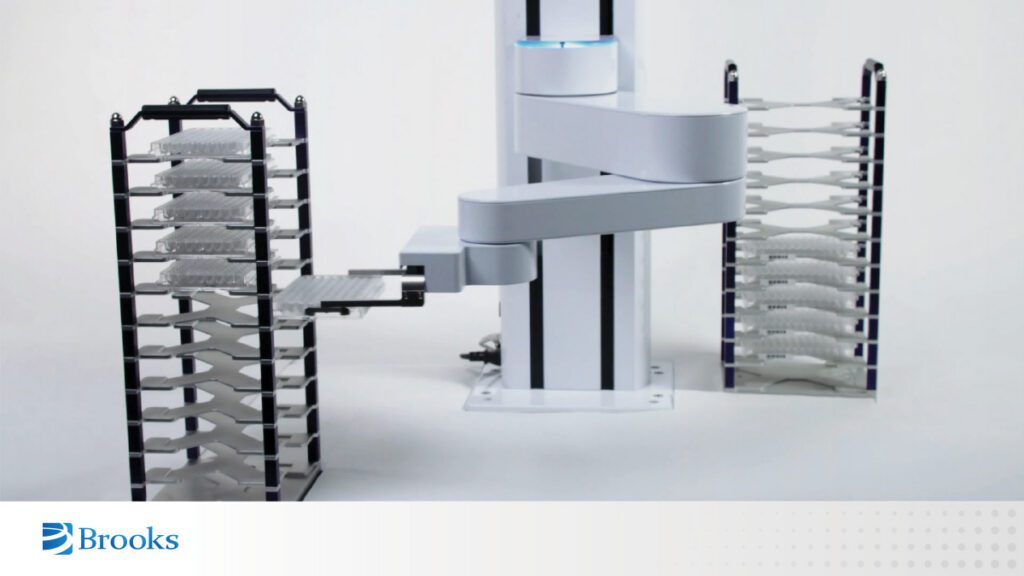
- Small robot: moves plates between instruments so timing stays consistent
- Vision or barcode station: confirms plate identity and prevents mix-ups
This setup fits into a small footprint and supports reliable walkaway runs without changing the layout of the lab.
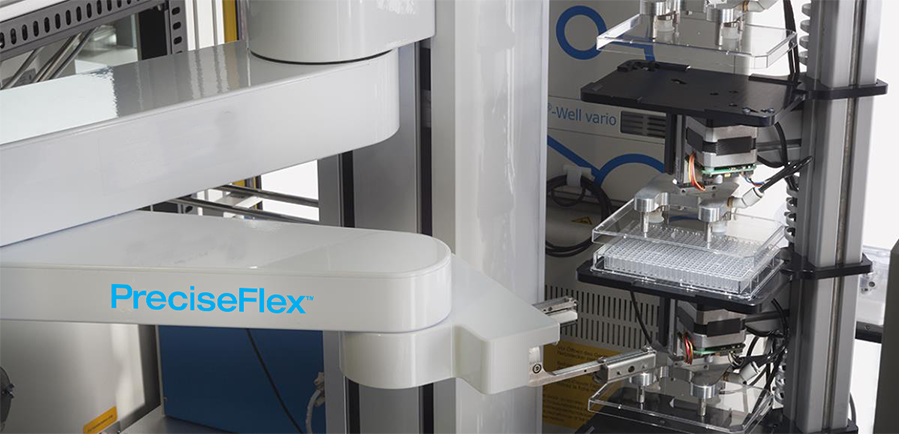
PreciseFlex™ robot in a compact bench-top configuration for reliable, small-footprint, and fast workflow automation.
How PreciseFlex™ Supports Compact Workflows
PreciseFlex™ robots offer several features that make compact screening setups easier to build and maintain:
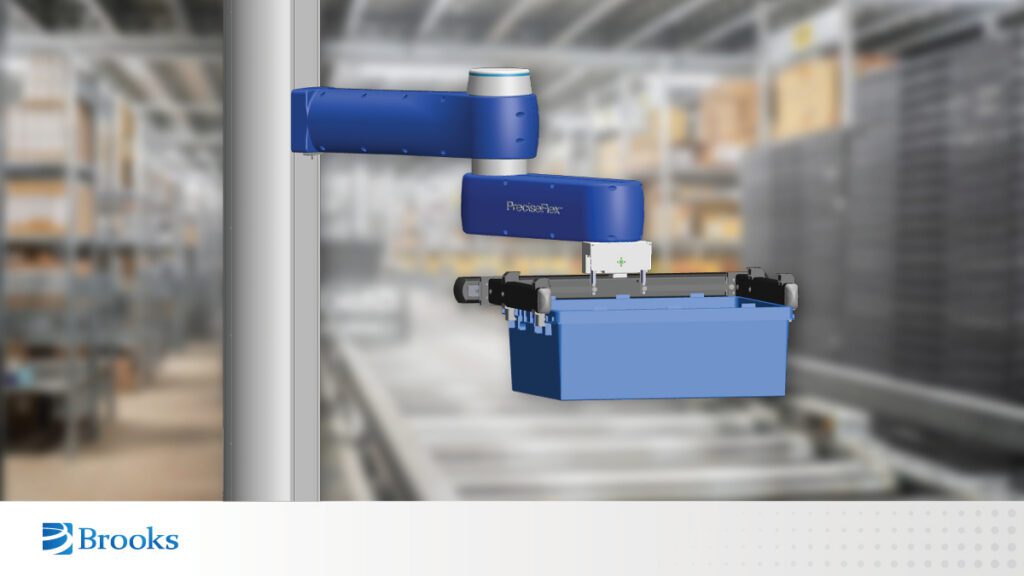
- Vertical column design lets the robot reach stacked instruments while using very little bench space.
- Embedded controller removes the need for a separate control cabinet, which prevents clogging up the open workspace.
- IntelliGuide™ Vision auto-learns new pick points when layouts change and reads barcodes to confirm plate identity and achieve precise chain-of-custody.
- Adaptive servo grippers adjust force through software so the robot can handle different plate or tube types without hardware changes.
- Flexible software options enable seamless control of PreciseFlex™ robots from your scheduling software. All enabled by open-source, O.S. agnostic API.
These capabilities allow labs to automate key steps without changing their bench layout or adding complex hardware.
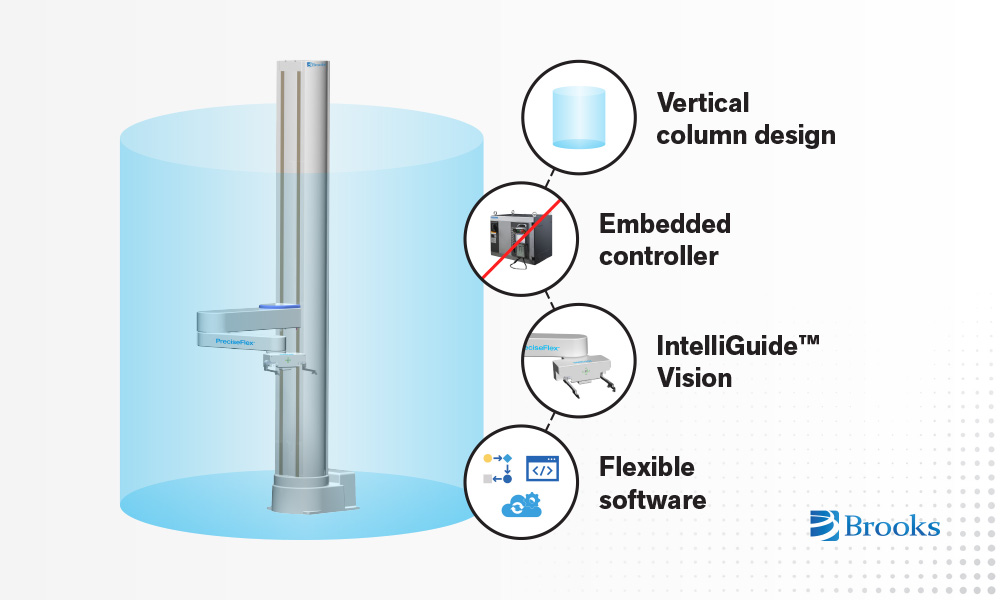
PreciseFlex™ robotics are designed for up to 30% space savings, future-proof software flexibility, and plug-and-play simplicity.
How Automation Speeds Up Lead Optimization and Secondary Workflows
SAR development, which studies how chemical changes affect activity, moves faster when robots maintain uniform timing and reduce variation across multi day tests. This stage depends on high repetition and even small delays and process variations can affect compound performance.
Lead optimization brings a new set of challenges. Teams repeat dose response tests, run secondary screens to confirm early results, and compare data across many cycles. These tasks rely on careful timing and consistent handling. If plates wait too long between actions or if steps are delayed, results can shift and become harder to compare.
How Automation Supports These Workflows
A compact automated setup manages routine workflows so staff do not have to. The system prepares and transfers plates, keeps timing steady, and sends each one to the right instrument at the right moment. This removes small delays that usually build up during manual work.
Automation also helps maintain consistency through long test cycles. Key improvements include:
- Timed reads that occur at predictable intervals
- Event based triggers, such as imaging when cells reach the right growth point
- Automatic plate identification that protects traceability and prevents mix-ups
These steps help keep each run aligned so results remain comparable across days and campaigns.
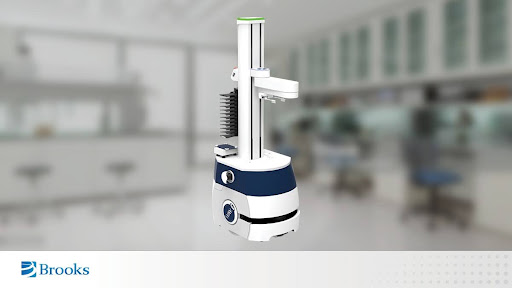
Some optimization tasks take place in different parts of the lab. Mobile robot carts can move plates or vials between these stations. Onboard vision aligns the robot to each instrument after docking, which helps the workflow stay flexible even when equipment moves.
What Optimization Teams Gain
Automation offers several practical benefits for teams working through SAR and secondary workflows including:
- Faster cycles with fewer delays between steps
- More consistent results across repeated runs
- Less off-shift staffing and fewer late night interventions
Together, these gains help scientists understand compound behavior sooner and make clearer decisions about which candidates should advance.
Benchtop Automation Is Gaining Ground in Drug Discovery
Discovery work changes quickly, and large automation platforms often cannot keep up. Many labs are moving toward compact, modular systems because they fit into existing spaces and adapt as workflows evolve. These setups provide an automated system that keeps up with rapid changes in discovery workflows.
Why Large Systems Fall Short
Traditional integrated systems were designed for stable, high volume workflows. In early discovery, methods shift often, equipment gets rearranged, and teams need flexibility to test new ideas. Large systems can become barriers because they are:
- Hard to reconfigure when workflows change
- Demanding on facility space and utilities
- Limited in flexibility when new assays or methods are added
These limits slow innovation in environments where speed matters.
Why Compact Systems Are Resurging
Compact systems fit directly on the bench and support rapid change. Labs can expand gradually by adding one workcell at a time instead of committing to a full-scale platform. This approach helps control cost and reduces disruption.
Compact automation also suits high-mix R&D because it adapts quickly when workflows shift. Teams can:
- Relocate instruments
- Adjust layouts
- Introduce new methods
These changes can be made without rebuilding a large automated system. Workflows can also be updated in software, which helps labs roll out new tests faster and keep pace with program needs.
Successful Drug Discovery Requires Walkaway Time
Compact automation gives labs the walkaway time needed to keep work moving without constant hands-on support. It does not require building a fully robotic lab. Instead, it creates steady, dependable routines that help projects progress even when staff are not at the bench.
What Walkaway Time Looks Like in Discovery Labs
Robots handle routine steps after hours so staff can focus on analysis during the day. Incubations and reads happen on schedule because the system controls the timing, not staff availability. Teams start each morning with completed runs rather than stalled workflows.
Walkaway time also supports different stages of discovery:
- Hit identification: where primary screens continue through the night to increase throughput
- Secondary testing: where dose response and selectivity steps advance automatically and stay aligned across runs
- Analytical work: where robots route samples to LC or imaging stations so processes stay on schedule
These patterns help each stage move forward without waiting for staff to complete routine handoffs.
How Walkaway Time Improves Daily Work
Automation reduces repetitive handling, which reduces physical strain and lowers the chance of timing errors. With fewer interruptions, scientists can spend more time interpreting results and planning next steps.
Consistent timing also improves data quality. When key steps run at the right intervals, results stay more comparable across cycles, making it easier to see trends and decide which compounds should advance.
A Successful Automation Setup
Labs that achieve strong walkaway time see several clear improvements:
- Higher instrument uptime
- Faster cycles from hit to lead (H2L)
- Fewer disruptions and more predictable throughput
These changes help research teams keep projects moving forward and stay aligned with the fast pace of discovery work.
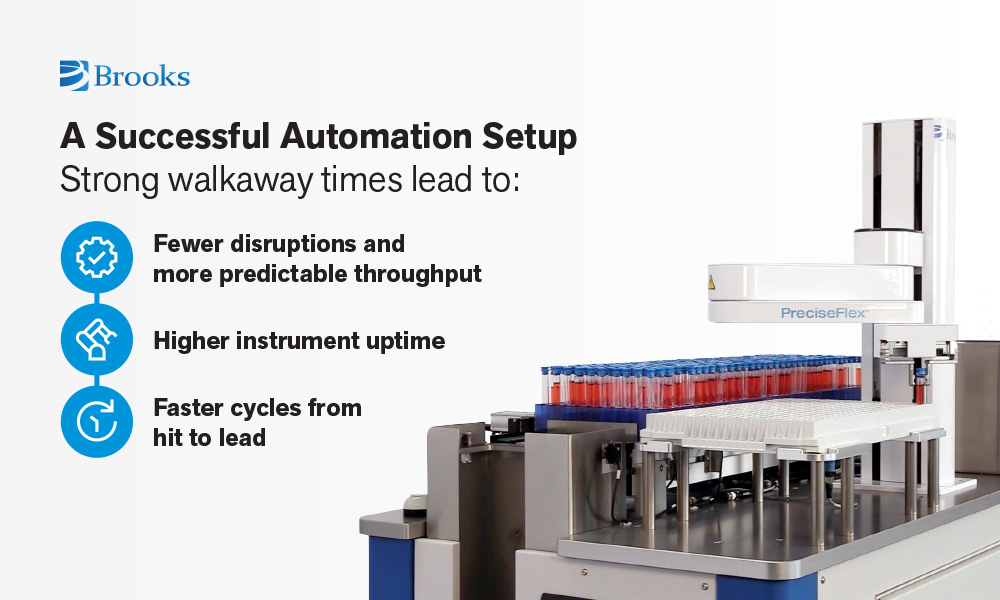
Achieving walkaway time between processes allows lab staff to complete more work rather than tending to the lab instruments.
How PreciseFlex™ Supports Daily Lab Productivity
PreciseFlex™ robots help labs get more done by taking over the routine steps that slow people down. They keep instruments running smoothly, even overnight, so teams make better use of their time and space. When robots handle repetitive work, scientists can focus on planning experiments, interpreting results, and doing the higher value tasks that move projects forward.
These benefits were demonstrated in a recent project with Precision Diagnostics. By using a PreciseFlex 3400 in a compact vial re-racking workflow, the lab increased walkaway time, reduced small handling delays, and kept their process running consistently in a limited footprint.
Read the full case study here.
The Path Forward for Discovery Labs
Compact, benchtop automation makes it easier for discovery teams to run tests with steady timing, fewer errors, and more reliable data. These smaller, modular setups also keep up with the fast pace of R&D. As workflows shift, the system can shift with them. This helps teams stay flexible without large rebuilds or major space changes.
Most importantly, walkaway operation gives scientists more time for the work that truly moves projects forward, not the repetitive steps that slow things down.