
Director of Business Development, Brooks Automation
Labs already use AI to plan experiments, prioritize work, and analyze data. The challenge is what happens next. Most systems cannot act on those decisions while work is running.
You may see this in your own workflows. A plan changes based on new data, but the system keeps running the same sequence. Someone has to step in or wait for the next cycle. This slows work and limits the value of the data.
Artificial intelligence changes more than decision-making. It changes how work needs to move through the lab. Workflows need to adapt, and systems need to respond in real time.
As adoption grows, the main challenge shifts from generating insights with models and algorithms to acting on them.
Where AI Creates Value In Laboratory Automation Today
AI is already delivering value in labs, but not in the way many expect. Its strongest impact today is in planning, prioritization, and decision-making before work begins.
Where AI Is Used Today
Most labs apply AI to improve how work is selected and designed, not how it is executed. Common use cases include:
- Experiment design and optimization
- Data analysis, pattern recognition, machine learning models, and AI algorithms
- Prioritizing which workflows or samples to run
These capabilities help teams focus on the most relevant work instead of running broad or repetitive experiments.
This changes how labs operate. Teams can make more informed decisions earlier, reducing human error in how work is selected and prioritized. Experimental scope becomes more focused, unnecessary runs are reduced, and results are better aligned with expected outcomes.
AI provides a direct impact on throughput and cost. Labs avoid low-value work, use equipment more efficiently, and move through iterations faster without adding headcount. Progress becomes more consistent because decisions are based on current data rather than fixed plans.
What AI Is Not Doing Yet
AI is not widely controlling workflows during execution. Most systems still follow predefined steps once a process starts. If new data suggests a change, adjustments often happen outside the system or in the next cycle.
For labs looking to move beyond planning, the next step is not more advanced models. It is building systems that can apply those decisions within live workflows.
Dynamic Scheduling Vs Real-Time Adaptation In Lab Workflows
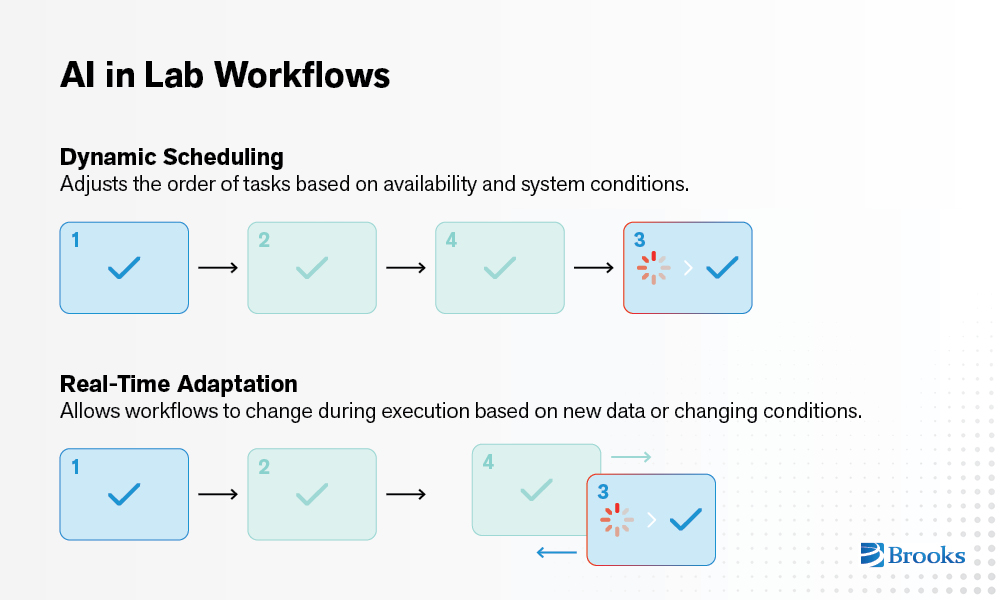
Most labs using AI today are improving how work is scheduled, not how it is executed. This distinction matters because it defines what AI can actually influence in current workflows.
Dynamic Scheduling (Current State)
Dynamic scheduling adjusts the order of tasks based on availability and system conditions. The workflow itself does not change. Only the sequencing of predefined steps is updated.
In practice, this means:
- Tasks can be reassigned when instruments are occupied
- Workflows can be prioritized based on system state
- Idle time can be reduced by shifting work across available resources
This approach improves efficiency without changing how experiments are run, streamlining task scheduling across available resources. The system still follows the same process. It simply changes how the workflow operates by determining when each step occurs.
Real-Time Adaptation (Emerging Capability)
Real-time adaptation goes further. It allows workflows to change during execution based on new data or changing conditions.
This includes:
- Adjusting experiment parameters while a process is running
- Responding to new data as it is generated
- Modifying task sequences based on outcomes, not just availability
This level of control requires deeper integration across systems. Decisions must be applied during execution, not just before it begins.
Why The Gap Exists
Most lab environments are not built for real-time adaptation. Several constraints limit what systems can do:
- Limited control at the device level
- Fragmented communication between systems
- Lack of consistent interfaces across vendors
These constraints prevent systems from acting on new information once a workflow is in progress.
Why This Distinction Matters
Understanding the difference between scheduling and adaptation helps set realistic expectations. Many labs are already using AI to improve scheduling, but fewer can adjust workflows in real time.
Moving beyond scheduling depends on how well systems can communicate and act on decisions as conditions change.
What AI Reveals About Lab Utilization And Reliability
As AI improves planning and prioritization, labs begin pushing more work through the same systems. This shifts utilization from intermittent use toward sustained operation with physical AI in labs. Equipment that once ran part of the day is now expected to support continuous workflows with real-time adjustments
This change builds over time. As AI-driven decisions increase, more experiments are scheduled and executed. Systems run longer, and the margin for delay gets smaller. As a result:
- Devices run more frequently and for longer periods
- Less buffer time remains between cycles
- Workflows become more dependent on overall system availability
Under these conditions, constraints that were not obvious before start to surface. Maintenance cycles begin to limit throughput, and small issues can have a wider impact across connected workflows. In practice:
- Maintenance cycles begin to limit throughput
- Failures or performance degradation have a larger impact
- Downtime affects multiple connected workflows, not just one system
This reflects a shift in how systems are used. Equipment that once ran at partial utilization is now expected to support much higher throughput.
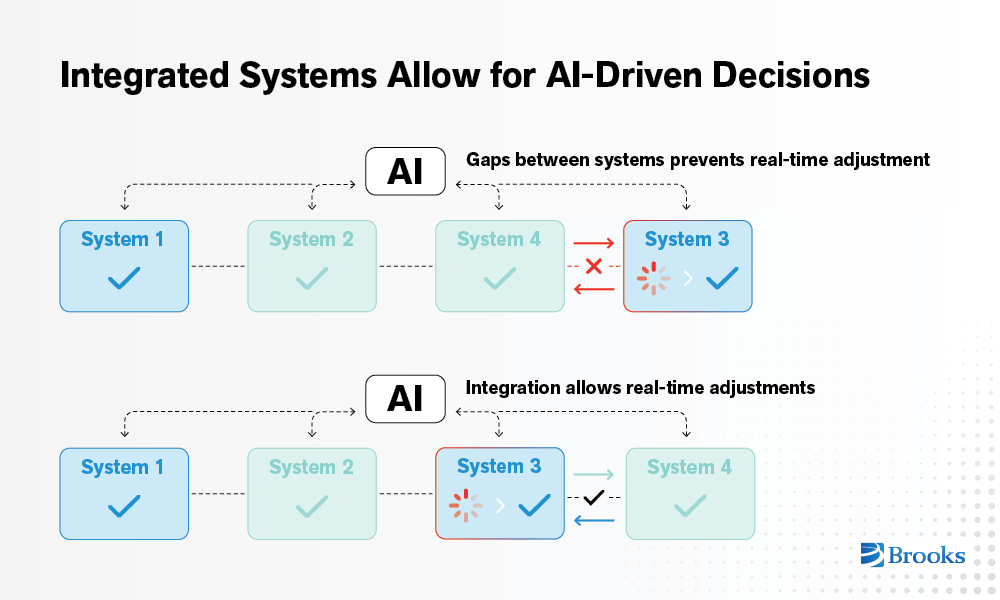
In practice, this often shows up as gaps between systems. Data may exist in one platform but not be accessible to another. Instruments may complete tasks without updating workflow state in real time. Decisions made at the software level may not carry through to execution without manual intervention. These gaps limit how much of the workflow AI can influence.
Integration Across Systems
Multi-vendor environments are standard. Systems need to communicate in a consistent way so that tasks can move between instruments, robotics, and software layers without manual coordination. As workflows become more dynamic, tasks become more interdependent, and changes in one part of the system can affect the rest of the workflow.
Role Of APIs And Orchestration
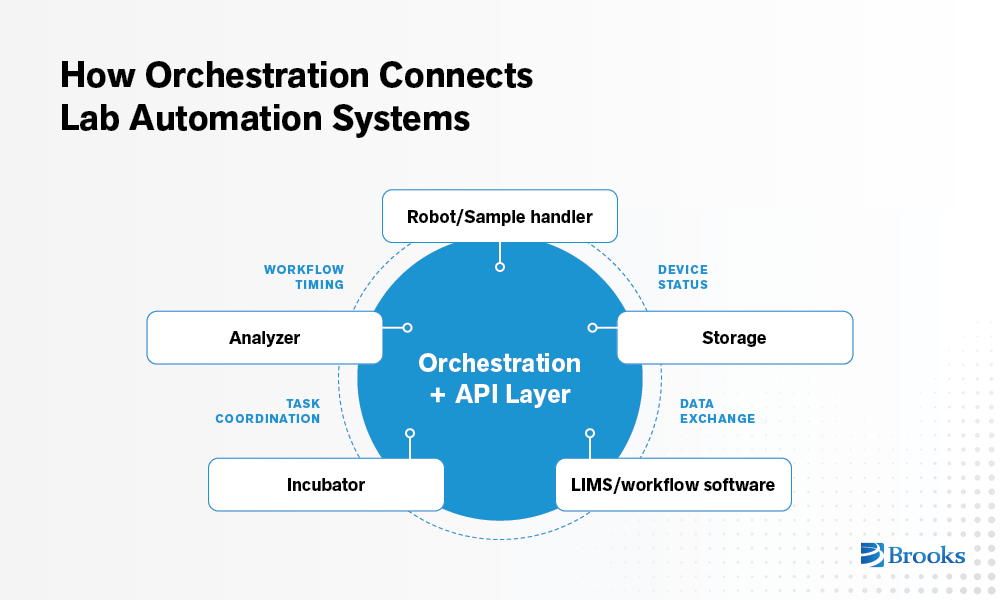
APIs and orchestration layers allow systems to exchange data, track workflow state, and manage dependencies between tasks. Instead of treating each device as a separate unit, orchestration creates a shared structure for how work is executed. This makes it possible to adjust workflows without stopping the entire process.
The TCS API for example, provides a seamless way to connect PreciseFlex robots to scheduling and workflow software and transfer data without requiring custom software integration for each system.
Data And Validation Readiness
AI-driven workflows also depend on reliable data and clear validation practices. If data is incomplete, inconsistent, or trapped in separate systems, AI recommendations become harder to trust and apply. Labs need clean data inputs, traceable decisions, and human oversight where quality, compliance, or scientific judgment matters. This helps teams adopt AI without losing control over how decisions are reviewed and executed.
Infrastructure That Can Scale
To support AI-driven workflows, labs need infrastructure that can grow with demand. This includes:
- Consistent control layers across systems
- Scalable system design
- The ability to add new equipment without rebuilding workflows
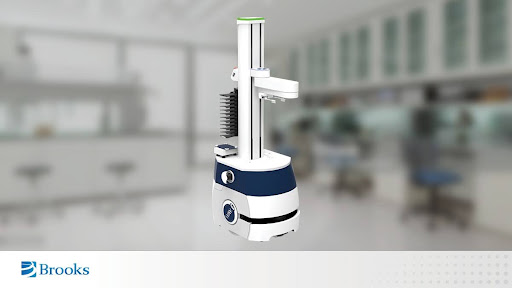
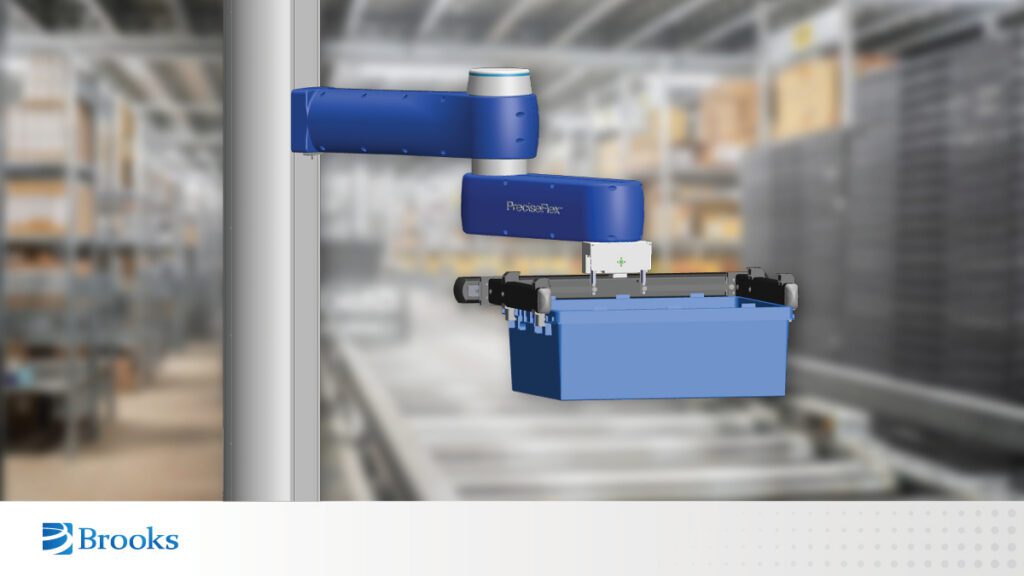
Enabling technologies also support execution at scale. Robotics systems such as PreciseFlex support consistent execution across workflows, which becomes important as systems scale and tasks need to run reliably across multiple processes. Vision systems like IntelliGuide Vision help handle variability in labware and positioning, while mobile systems support movement across different lab areas.
AI depends on system readiness. Without integrated infrastructure, decisions remain isolated and cannot be applied in real workflows. Labs that want to move toward AI-driven operations should focus first on how their systems connect and communicate, then build toward scalable execution.
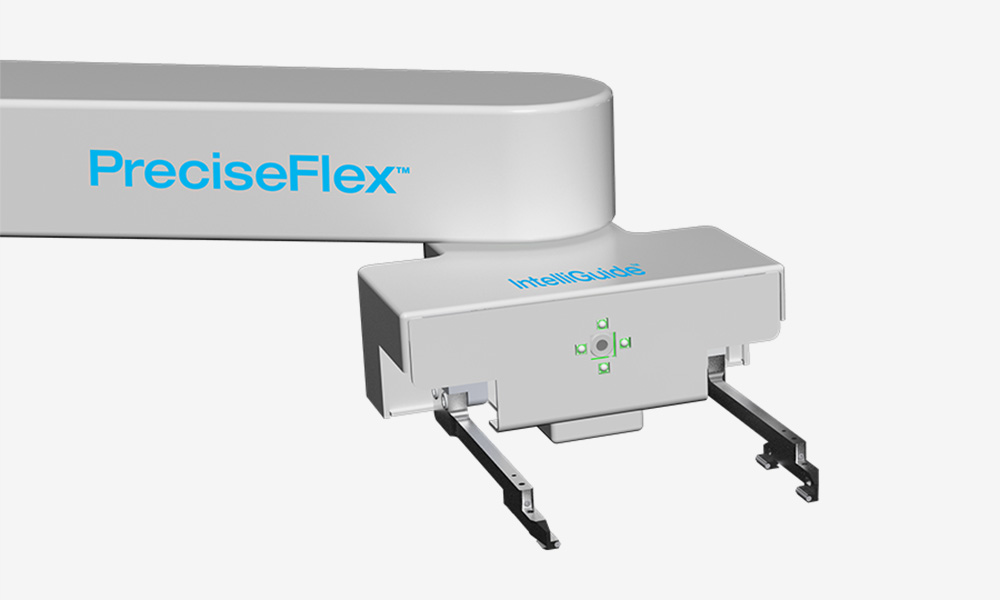
PreciseFlex™ robots can be equipped with the IntelliGuide™ vision system for auto detection and micro localization.
Building Systems That Can Act On AI Decisions
AI is already improving how labs decide what to run. The next step is making sure those decisions can be applied in real workflows. That depends on how well systems communicate, coordinate, and perform under higher demand.
For many labs, the gap is not in data or models. It is in how systems are connected and how work moves across them. As utilization increases and workflows become more dynamic, infrastructure, control, and reliability determine what AI can actually deliver.
Lab operations that focus on integration and system design are better positioned to turn AI into measurable results. Those that do not often run into limits with manual intervention, system constraints, or inconsistent execution.